
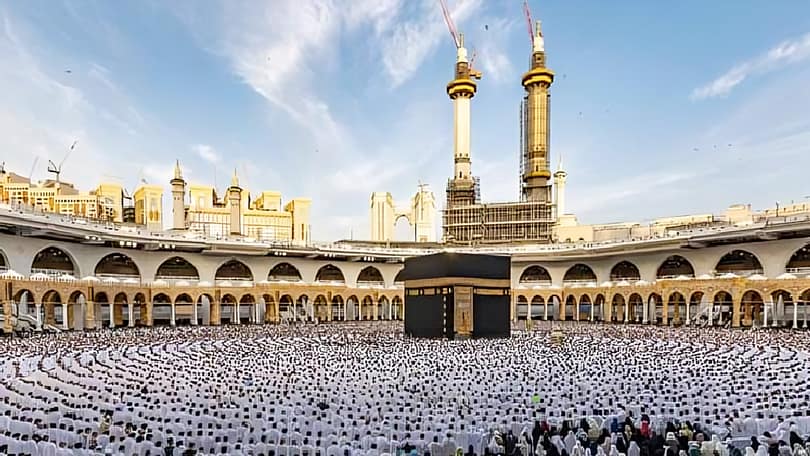
Hajj: A collection of physical, spiritual and financial acts of worship
دین اسلام ایک عالمگیر ضابطہ حیات ہے اور شریعت اسلامی کے اجزائے ترکیبی میں ہمہ گیریت کے اثرات موجود ہیں، خلاقِ عالم نے کمال حکمت سے پیغمبرانہ مشن کی جدوجہد کو ایک خاص مقام پر اکٹھا کر کے اسلام کے ابدی پیغام کو آفاقی نظام سے مربوط فرما دیا۔
دینِ فطرت عبد اور معبود کے تعلق کو ہر حال میں قائم رکھنے کی تلقین کرتا ہے اور اسی تعلق کو مضبوط کرنے کیلئے نظام عبادت وضع فرمایا گیا، گو مومن کی زندگی ہر حال میں عبادت سے عبارت ہے لیکن نماز، روزہ، زکوٰۃ اور حج کو اس کا مظہرِ خاص کیا گیا، ارکانِ اسلام میں حج آخری رکن ہے لیکن من جملہ نماز، روزہ اور زکوٰۃ کی معراج کا نام حج ہے کیونکہ یہ جسمانی، روحانی اور مالی عبادات کا مجموعہ ہے، جس میں نمازکی حرکات و سکنات، زکوٰۃ کی شکل میں انفاق فی سبیل اللہ اور صوم کی صورت میں تلذذِ نفسانی کی بیخ کنی کی گئی ہے، انہی تمام صورتوں کا مجموعہ اللہ تعالیٰ نے حج کی شکل میں عطا فرمایا۔
شعائراللہ کی صورت میں انبیاء کی مختلف یادگاروں کو مناسک حج میں قائم فرما دیا، اللہ جل شانہ نے محبت کرنے والوں کو ان عظیم یادگاروں کی طرف قصد کرنے کا حکم فرمایا: ’’جو شعائراللہ کی تعظیم کرتا ہے تو یہ بات دلوں کے تقویٰ سے ہے‘‘ (الحج:32)، مکہ معظمہ میں کعبۃ اللہ اور مضافات میں حضرت آدم علیہ السلام سے لے کر نبی آخرالزمان حضرت محمدﷺ تک اکثر انبیاء کی محبت الہٰی میں کیفیات موجود ہیں، اللہ رب العزت نے ان جگہوں پر اسی انداز و شکل میں ان یادگاروں کو قائم کرنے کا حکم دیا اور اس کو دلوں کا تقویٰ قرار دیا۔
حج کی فرضیت
خالقِ کائنات نے انسان کی تخلیق کے بعد اس پر بیشمار احسانات فرمائے ۔اس کی پیدائش سے لے کر مرنے تک بلکہ مرنے کے بعد بھی بے حساب انعامات اس کیلئے مختص کردیے۔ تاہم ان کا حصول اس کی سعی اور جدوجہد سے مشروط کردیا، کیونکہ یہ اللہ تعالیٰ جل جلالہ کی سنتِ جاریہ ہے کہ جیسا سبب ہوگا ویسا ہی مسبب ہوگا۔ انہی انعامات میں سے ایک انعام بندہ کی کوتاہیوں اور لغزشوں سے درگزری ہے، جس کے اللہ تعالیٰ نے لاتعداد طریقے بیان فرمائے، جن میں ایک عظیم طریقہ حج بیت اللہ ہے جو انسان کو ایسے گناہوں سے پاک وصاف اور مبراء کردیتا ہے گویا کہ انسان دوبارہ اپنے نامہ اعمال کا آغاز کرتا ہے۔
حج قرآن و حدیثِ کی روشنی میں
حج کی فرضیت خود قرآنِ مجید اور صحیح حدیث سے ثابت ہے، اللہ پاک نے قرآنِ مجید میں صاحبِ استطاعت شخص کو حج کرنے کا حکم فرمایا ہے، ارشادِ باری تعالیٰ ہے: ’’اللہ کیلئے لوگوں پر اس گھر کا حج فرض ہے جو بھی اس تک پہنچنے کی استطاعت رکھتا ہو، اور جو (اس کا) منکر ہو تو بے شک اللہ سب جہانوں سے بے نیاز ہے‘‘ (آل عمران:97)۔
اس آیت کریمہ میں حج کی فرضیت اور شرطِ فرضیت یعنی استطاعت کو بھی بیان کیا گیا ہے اور ساتھ ہی ساتھ یہ وعید بھی کی گئی ہے کہ جو شخص حج کی فرضیت کا انکار کرے وہ کافر ہے، جس شخص کو اللہ تعالیٰ بیت اللہ کے حج کی استطاعت عطا کر دے تو اسے سفرِ حج کیلئے ذہنی، جسمانی، مادی اور روحانی تیاری کر لینی چاہیے۔
حج کی فضیلتیں بے شمار ہیں، ذیل میں چند احادیث جن میں اجمالی طور سے حج کی فضیلت کا ذکر ہے بیان کی جاتی ہیں تاکہ حج کے فضائل سے آگاہی ہو اور ان فضائل کو دیکھ کر قلب میں حج کا داعیہ پیدا ہو اور ادائے فریضہ میں اعانت کا باعث ہو۔
حضرت ابو اُمامہؓ سے روایت ہے کہ حضور نبی اکرمﷺ نے فرمایا: ’’جوشخص زادِراہ اور سواری کا مالک ہو جو سواری اس کو بیت اللہ تک پہنچادے، اور وہ پھر بھی حج نہ کرے تو اس پر کچھ نہیں کہ وہ یہودی ہو کر مرے یا عیسائی ہو کر‘‘( ترمذی، کتاب: الحج، حدیث:812)۔
حضرت ابوہریرہؓ بیان کرتے ہیں کہ حضور نبی اکرمﷺ نے ہمیں خطبہ دیا اور فرمایا: ’’اے لوگو! تم پر حج فرض ہوگیا، پس حج کیا کرو، ایک شخص نے عرض کیا: یا رسول اللہﷺ کیا حج ہر سال فرض ہے؟ آپﷺ خاموش رہے حتیٰ کہ اس نے تین بار یہی عرض کیا، پھرنبی اکرمﷺ نے فرمایا: اگر میں ہاں کہہ دیتا تو حج ہر سال فرض ہو جاتا اور تم اس کی ادائیگی کی طاقت نہ رکھتے، جن چیزوں کا بیان میں چھوڑ دیا کروں تم ان کا سوال مت کیا کرو، کیونکہ تم سے پہلے لوگ اسی لئے ہلاک ہوگئے کہ وہ انبیاء کرام علیہم السلام سے بکثرت سوال کیا کرتے تھے اور انبیاءؑ سے اختلاف کرتے تھے، لہٰذا جب میں تم کو کسی چیز کا حکم دوں تو اس پر بقدر استطاعت عمل کیا کرو اور جب میں کسی چیز سے روک دوں تو اس کو چھوڑ دیا کرو‘‘( صحیح مسلم :1337)
حضرت عبداللہ ابن عباسؓ فرماتے ہیں کہ قبیلہ خثعم کی ایک عورت نے حجۃ الوداع کے موقع پر رسول اللہﷺ سے اس وقت مسئلہ دریافت کیا جبکہ آپﷺ سواری پر تھے اور حضرت فضل بن عباسؓ کو پیچھے بٹھایا ہوا تھا، وہ عرض کرتی ہیں’’یا رسول اللہﷺ یہ (حج) اللہ تعالیٰ نے تو اپنے بندوں پر فرض فرمایا ہے لیکن میرے والد محترم اتنے بوڑھے ہوگئے ہیں کہ وہ سواری پر اچھی طرح بیٹھ بھی نہیں سکتے، ایسے میں کیا میں ان کی طرف سے حج کر سکتی ہوں۔ آپﷺ نے جواباً فرمایا: ہاں کر سکتی ہو‘‘(صحیح بخاری: 4138)۔
حج مبرور کی وضاحت
علامہ ابن حجرؒ لکھتے ہیں: حج مبرور وہ حج ہے جس میں کوئی گناہ نہ ہو، یہ بھی کہا گیا ہے کہ جس میں ریا اور نام و نمود نہ ہو وہ حج مبرور ہے، بعض کہتے ہیں حج مبرور وہ حج ہے جس کے بعد گناہ نہ ہو۔
حج کی مقبولیت کی علامتیں
امام محمدغزالیؒ حج مبرورکی علامتیں لکھتے ہیں کہ حج کے قبول ہونے کی علامتیں حسب ذیل ہیں۔ (1) مال یا بدن میں کوئی مصیبت یا نقصان پہنچے تو اسے خوش دلی سے قبول کرے۔ (2): جو گناہ کرتا تھا انہیں چھوڑ دے۔ (3): بُرے دوستوں سے کنارہ کش ہو کر نیک بندوں سے دوستی کرے۔ (4): کھیل کود اور غفلت بھری بیٹھکوں کو ترک کرکے ذکر اور بیداری کی مجلس اختیار کرے۔ (5) واپسی کے بعد دنیا سے بے رغبت ہو کر آخرت کی جانب متوجّہ ہو اور بیت اللہ شریف کی زیارت کے بعد اپنے رب سے ملاقات کی تیاری کرے(احیاء العلوم،ج 1، ص349،354)۔
حج واجب ہونے کی شرائط
حج کے واجب ہونے کی شرائط مقرر ہیں، جو اِس طرح ہیں، مسلمان ہونا، بالغ ہونا، عقلمند ہونا، آزاد ہون ا، تندرست ہونا، دورانِ سفر اخراجات کرنے کی قوت میسر ہونا، راستے میں امن و امان ہونا، جان کا خوف نہ ہونا، عورت کا حالتِ عدت میں نہ ہونا، عورت کیلئے شوہر یا محرم کا ساتھ ہونا۔
حج کے واجبات
شیخ رحمہ اللہ سندھی نے 28 واجباتِ حج لکھے ہیں جو کہ درج ذیل ہیں۔ (1): میقات سے احرام باندھنا۔ (2): صفا و مروہ کے درمیان سعی کرنا۔(3): سعی کو صفا سے شروع کرنا۔(4): اگر عذر نہ ہو تو پیدل سعی کرنا۔(5): دن میں وقوف کیا تو اتنی دیر تک وقوف کرے کہ آفتاب ڈوب جائے۔ (6): وقوف میں رات کا کچھ حصہ آجانا۔(7): عرفات سے واپسی میں امام کی متابعت کرنا۔ (8): مزدلفہ میں ٹھہرنا۔ (9): مغرب و عشاء کی نماز مزدلفہ میں آ کر پڑھنا۔ (10): تینوں جمروں پر دسویں، گیارہویں، بارھویں تینوں دن کنکریاں مارنا۔
(11): جمرہ عقبہ کی رَمی پہلے دن حلق (بال کٹوانا) سے پہلے ہونا۔(12): ہر روز کی رَمی کا اسی دن ہونا۔ (13): سر مونڈانا یا بال کتروانا۔ (14): حاجی کا ایام نحر حرم شریف میں ہونا (15): قربانی کرنا۔(16): قربانی کا حرم اور ایامِ نحر میں ہونا۔(17): طوافِ افاضہ کا اکثر حصہ ایام نحر میں ہونا۔ (18): طواف حطیم کے باہر سے ہونا۔ (19): داہنی طرف سے طواف کرنا۔(20): عذر نہ ہو تو چل کر طواف کرنا۔
(21): طواف کرنے میں نجاست حکمیہ سے پاک ہونا، یعنی جنبی و بے وضو نہ ہونا۔ (22): طواف کرتے وقت ستر چھپا ہونا۔ (23): طواف کے بعد دورکعت نماز پڑھنا۔ (24): کنکریاں پھینکنے، ذبح کرنے اور سر منڈانے اور طواف میں ترتیب۔ (25): طوافِ صدر یعنی میقات سے باہر کے رہنے والوں کیلئے رخصت کا طواف کرنا۔ (26): وقوف عرفہ کے بعد سر منڈانے تک جماع نہ ہونا۔ (27): احرام کے ممنوعات مثلاً سِلا کپڑا پہننے اور منہ یا سر چھپانے سے بچنا( لباب المناسک، ص68)
سننِ حج
حج کی سنتیں حسب ذیل ہیں: مفرد آفاقی اور قارن کا طواف قدوم کرنا۔ طواف قدوم میں یا طوافِ فرض میں رمل کرنا۔ صفا مروہ کی سعی میں دونوں سبز نشانوں کے درمیان جلدی چلنا۔ قربانی کی راتوں میں سے ایک رات منیٰ میں قیام کرنا۔ سورج نکلنے کے بعد منیٰ سے عرفات جانا۔ سورج نکلنے سے پہلے مزدلفہ سے منیٰ آجانا۔ مزدلفہ میں رات گزارنا۔ گیارہ اور بارہ ذی الحجہ کو تینوں جمرات میں ترتیب سے سات سات کنکریاں مارنا (فتاوی ہندیہ،ج1، ص 209)
حالتِ احرام کی ممنوعات
حج وعمرہ کے دوران حالتِ احرام میں ممنوعہ امور درج ذیل ہیں (1): شکار کرنا۔(2): حدودِ حرم میں درخت، گھاس، پودے وغیرہ کاٹنا یا مکھی، مچھر، جوں وغیرہ مارنا۔ (3): جسم سے کوئی بال توڑنا یا کاٹنا یا ناخن کاٹنا یا کٹوانا۔ (4): سلے ہوئے کپڑے پہننا۔ (5): خوشبو کا استعمال کرنا۔ (6): حجر اسود کو خوشبو لگی ہوتی ہے اس لیے احرام باندھے ہوئے ہوں تواس کا بوسہ نہ لیں اور نہ ہی بیت اللہ کے پردوں کو چھوئیں کہ ان پر بھی خوشبو لگی ہوتی ہے۔ (7): مرد کیلئے سر اور چہرے کا چھپانا اور عورت کیلئے چہرے پر کپڑے کا مس ہونا۔
(8): میاں بیوی کا ازدواجی تعلقات قائم کرنا۔ (9): احرام کی حالت میں کسی بھی قسم کا گناہ کا کام کرنا۔ (10): ساتھیوں یا دوسرے لوگوں کے ساتھ لڑائی جھگڑا کرنا۔ (11):خشکی کے جانور کو بھگانا، اس کا انڈا توڑنا، داڑھی یا سر کے بالوں کو خضاب لگانا۔ (12): خوشبو لگانا، ناخن یا بال کاٹنا یا کٹوانا، سر یا منہ کوچھپانا یا ڈھانکنا خواہ سارا ہو یا تھوڑا۔ (13): زعفران یا کسی اور خوشبودار چیز میں رنگا ہوا کپڑا پہننا۔ (14): ایسا جوتاپہننا جس سے پاؤں کی ابھری ہوئی ہڈی چھپ جائے۔ (15) جو شخص حالت احرام میں مرجائے تو اس کی تجہیزوتکفین غیرمحرم کی طرح کی جائے گی یعنی اس کاسراورچہرہ ڈھانپا جائے گا۔
The religion of Islam is a universal code of life and the components of Islamic law have the effects of universality. The Creator of the world, with perfect wisdom, gathered the struggle of the prophetic mission at a special place and connected the eternal message of Islam with the universal system.
The religion of nature advises to maintain the relationship between the servant and the god in all circumstances, and to strengthen this relationship, the system of worship was devised. Although the life of a believer consists of worship in all circumstances, prayer, fasting, zakat and hajj have been made its special manifestation. Hajj is the last pillar in the pillars of Islam, but the name of the ascension of prayer, fasting and zakat is Hajj because it is a collection of physical, spiritual and financial worship, in which the movements and stillness of prayer, spending in the form of zakat in the form of fasting and the eradication of self-indulgence in the form of fasting have been uprooted. The combination of all these forms has been granted by Allah Almighty in the form of Hajj.
In the form of the symbols of Allah, various monuments of the prophets were established in the rituals of Hajj. Allah Almighty commanded the lovers to aim for these great monuments: “Whoever honors the symbols of Allah, it is from the piety of the hearts” (Al-Hajj: 32). In the Kaaba of Allah in Makkah and its environs, there are qualities in the love of Allah of most of the prophets, from Hazrat Adam (peace be upon him) to the Prophet of the End of Times, Hazrat Muhammad (peace be upon him). Allah Almighty ordered these monuments to be established in these places in the same manner and form and declared it as piety of the hearts.
The Obligation of Hajj
The Creator of the universe bestowed countless favors on man after his creation. From his birth to his death, and even after his death, He reserved countless rewards for him. However, He made their attainment conditional on his striving and struggle, because it is the ongoing Sunnah of Allah Almighty that as there is a cause, so will there be a cause. One of these blessings is forgiveness of the shortcomings and mistakes of the servant, for which Allah Almighty has described countless ways, among which a great way is Hajj to the House of Allah, which purifies and absolves a person from such sins, as if a person starts his book of deeds anew.
Hajj in the light of the Quran and Hadith
The obligation of Hajj is proven by the Holy Quran itself and the authentic Hadith. Allah Almighty has commanded those who are able to do so in the Holy Quran. The Almighty says: “Pilgrimage to the House is obligatory for mankind, whoever is able to reach it. And whoever disbelieves, then indeed, Allah is Free from need of all the worlds.” (Aal-Imran: 97)
This verse describes the obligation of Hajj and the condition of obligation, i.e. ability, and at the same time, it warns that whoever denies the obligation of Hajj is a disbeliever. Whoever Allah Almighty grants him the ability to perform Hajj to the House of Allah, he should prepare himself mentally, physically, materially and spiritually for the journey of Hajj.
The virtues of Hajj are innumerable. Below are some hadiths that briefly mention the virtues of Hajj, so that one can be aware of the virtues of Hajj and, upon seeing these virtues, the desire for Hajj arises in the heart and helps in performing the obligation.
Hazrat Abu Umama (RA) narrated that the Holy Prophet (PBUH) said: “Whoever owns a journey and a vehicle that can take him to the House of Allah, and still does not perform Hajj, it is not a sin for him to die a Jew or a Christian.” (Tirmidhi, Book: Al-Hajj, Hadith: 812)
Hazrat Abu Hurairah (RA) narrates that the Holy Prophet (PBUH) delivered a sermon to us and said: “O people! Hajj has become obligatory upon you, so perform Hajj.” A man asked: O Messenger of Allah (PBUH), is Hajj obligatory every year? He remained silent until he repeated the same request three times. Then the Prophet (peace and blessings of Allaah be upon him) said: If I had said yes, Hajj would have become obligatory every year and you would not have the means to perform it. Do not ask about the things I have omitted, for the people before you were destroyed because they used to ask the Prophets (peace and blessings of Allaah be upon them) a lot and disagree with them. So when I command you to do something, do it to the best of your ability, and when I forbid you from doing something, leave it.” (Sahih Muslim: 1337) Hazrat Abdullah Ibn Abbas (may Allaah be pleased with him) narrates that a woman from the tribe of Khath’am asked the Messenger of Allaah (peace and blessings of Allaah be upon him) a question on the occasion of the Farewell Hajj while he was riding and Fadl ibn Abbas (may Allaah be pleased with him) was riding behind. She said: “O Messenger of Allaah (peace and blessings of Allaah be upon him), Allaah has made this (Hajj) obligatory on His servants, but my respected father has become so old that he cannot even sit properly on a horse. Can I perform Hajj on their behalf? He (peace and blessings of Allah be upon him) replied: Yes, you can. (Sahih Bukhari: 4138)
Explanation of Hajj Mabroor
Allama Ibn Hajar (may Allah be pleased with him) writes: Hajj Mabroor is a Hajj in which there is no sin. It has also been said that the one in which there is no show and fame is a Hajj Mabroor. Some say that Hajj Mabroor is a Hajj after which there is no sin.
Signs of the Acceptance of Hajj
Imam Muhammad Ghazali (may Allah be pleased with him) writes that the signs of the acceptance of Hajj are as follows: (1) If any misfortune or loss befalls you in wealth or body, accept it with a cheerful heart. (2) Leave those who used to commit sins. (3) Stay away from bad friends and befriend righteous people. (4) Give up games and careless gatherings and choose gatherings of remembrance and awakening. (5) After returning, he should become disinterested in this world and turn towards the Hereafter, and after visiting the Holy House, he should prepare for meeting his Lord (Ihya’ al-Uloom, vol. 1, pp. 349, 354).
Conditions for making Hajj obligatory
The conditions for making Hajj obligatory are set, which are as follows: being a Muslim, being of age, being sane, being free. A, being healthy, having the strength to spend during the journey, being safe and secure on the way, not having fear for one’s life, the woman not being in the state of iddah, the woman being accompanied by her husband or a mahram.
Obligations of Hajj
Sheikh Sindhi, may Allah have mercy on him, has written 28 obligations of Hajj, which are as follows: (1): Entering Ihram from the Miqat. (2): Performing Sa’i between Safa and Marwah. (3): Starting Sa’i from Safa. (4): If there is no excuse, performing Sa’i on foot. (5): If one stands during the day, he should stand until the sun sets. (6): Spending part of the night in standing. (7): Following the Imam on the way back from Arafat. (8): Staying in Muzdalifah. (9): Coming to Muzdalifah to pray Maghrib and Isha prayers. (10): Throwing pebbles at the three Jamarats on the tenth, eleventh, and twelfth days.
(11): The rami of Jamarat-e-Aqaba should be done before the first day of the ritual (hair cutting). (12): The rami of every day should be done on the same day. (13): Shaving the head or cutting the hair. (14): The pilgrim should be in the Haram during the days of the ritual (15): Sacrifice. (16): The sacrifice should be done in the Haram and during the days of the ritual (17): Most of the Tawaf-e-Ifadah should be done during the days of the ritual (18): Tawaf should be done outside the Hatim. (19): Tawaf should be done from the right side. (20): If there is no excuse, then Tawaf should be done walking. (21): Being free from impurity during Tawaf, i.e. not being junub and without ablution. (22): Covering the body while performing Tawaf. (23): Praying two rak’ahs after Tawaf. (24): The order of throwing pebbles, slaughtering, shaving the head and Tawaf. (25): Tawaf-e-Sadr, i.e., the farewell Tawaf for those living outside the Miqat. (26): Not having sexual intercourse after standing at Arafat until the head is shaved. (27): Avoiding the prohibitions of Ihram, such as wearing a silk cloth and covering the face or head (Libab al-Manasik, p. 68)
Sunnahs of Hajj
The Sunnahs of Hajj are as follows: Tawaf al-Afaqi and Qarin for Mufard al-Afaqi. To perform the Tawaf al-Qadum or the Tawaf al-Fard. To walk quickly between the two green marks in the Sa’i of Safa and Marwah. To stay in Mina for one of the nights of sacrifice. To go from Mina to Arafat after sunrise. To come from Muzdalifah to Mina before sunrise. To spend the night in Muzdalifah. Throwing seven pebbles in each of the three Jamarats on the 11th and 12th of Dhul-Hijjah in sequence (Fatawa Hindiya, Vol. 1, p. 209)
Prohibitions in the state of Ihram
The following are prohibited acts during the state of Ihram during Hajj and Umrah: (1): Hunting. (2): Cutting trees, grass, plants, etc. within the limits of the Haram, or killing flies, mosquitoes, lice, etc. (3): Tearing or cutting any hair from the body or cutting or trimming nails. (4): Wearing sewn clothes. (5): Using perfume. (6): The Black Stone has a scent, so while wearing Ihram, do not kiss it or touch the curtains of the House of Allah, as they also have a scent. (7): Covering the head and face for men and touching the face with clothes for women.
(8): Establishing marital relations between husband and wife. (9): Doing any kind of sinful act while in the state of Ihram. (10): Fighting with companions or other people. (11): Driving away a land animal, breaking its egg, dyeing the beard or hair. (12): Applying perfume, cutting or trimming nails or hair, covering or covering the head or face, whether completely or partially. (13): Wearing clothes dyed with saffron or any other fragrant substance. (14): Wearing shoes that hide the protruding bone of the foot. (15) If a person dies in a state of Ihram, his burial will be done in the same manner as a non-Mahram, i.e. his head and face will be covered.